Gwangan Market in Busan: Finding the Bakeries and Espresso Bar Inside a Half-Empty Old Market
From the street, the building looks like a market that shut down long ago. The sign over the entrance is old, the stalls inside are mostly bare, and nothing about the place says coffee or fresh bread. Yet Visit Busan sends readers here for exactly that, because a handful of small shops have moved into the market and the lanes around it. If you like good bread and strong coffee, I think it's worth the five subway stops from Haeundae. If you want a busy food market with stalls cooking in front of you, this is the wrong place, and I'll explain why. The facts here are drawn from two sources only, Visit Busan and Busan Transportation Corporation.
An empty hall with shops in the corners
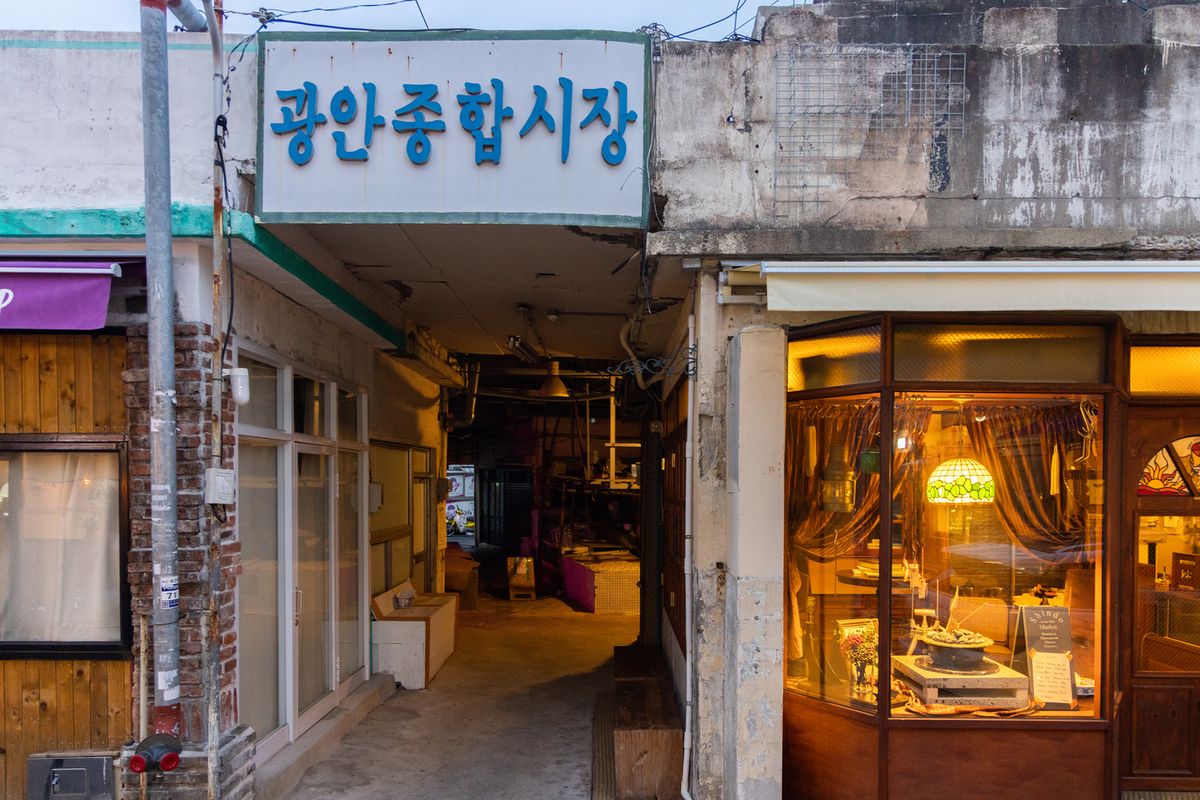
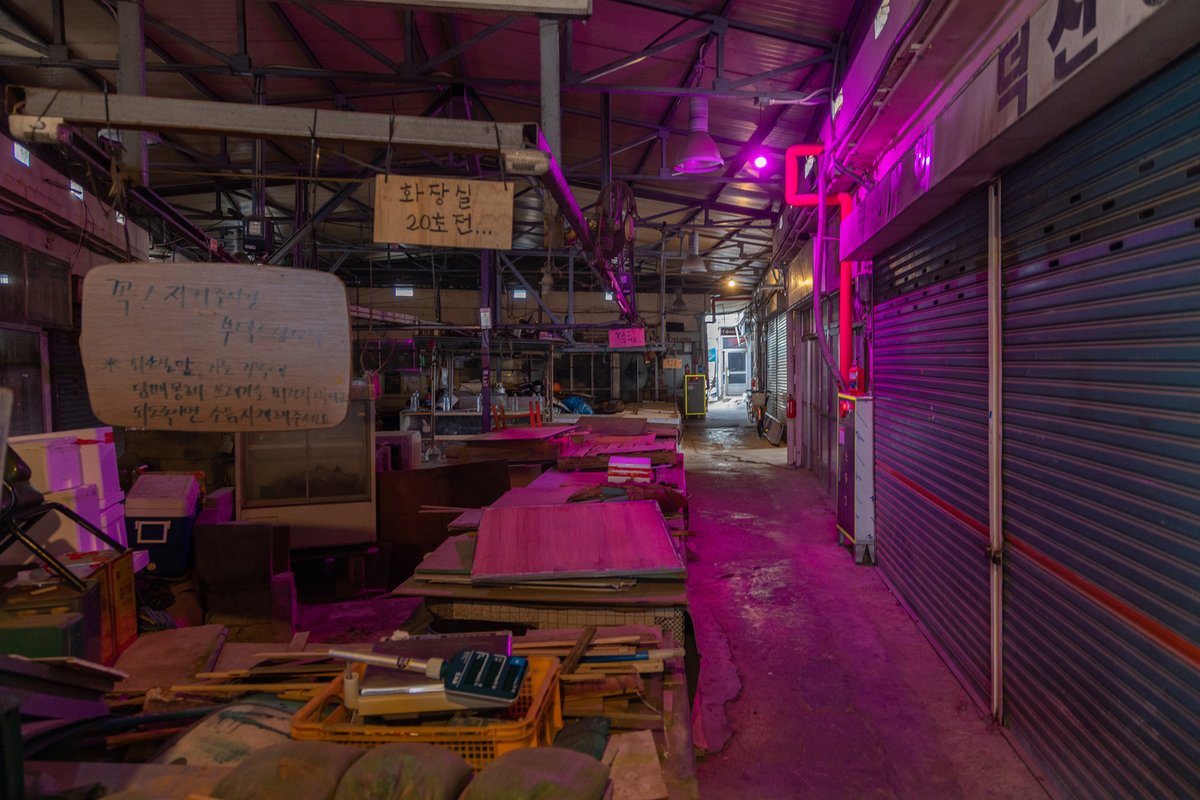
Visit Busan treats the building with the old Gwangan Market sign as the place to start. That sign has become a photo backdrop in its own right, mostly for younger visitors who have never seen lettering like it, and inside you'll find empty display counters where vendors once worked.
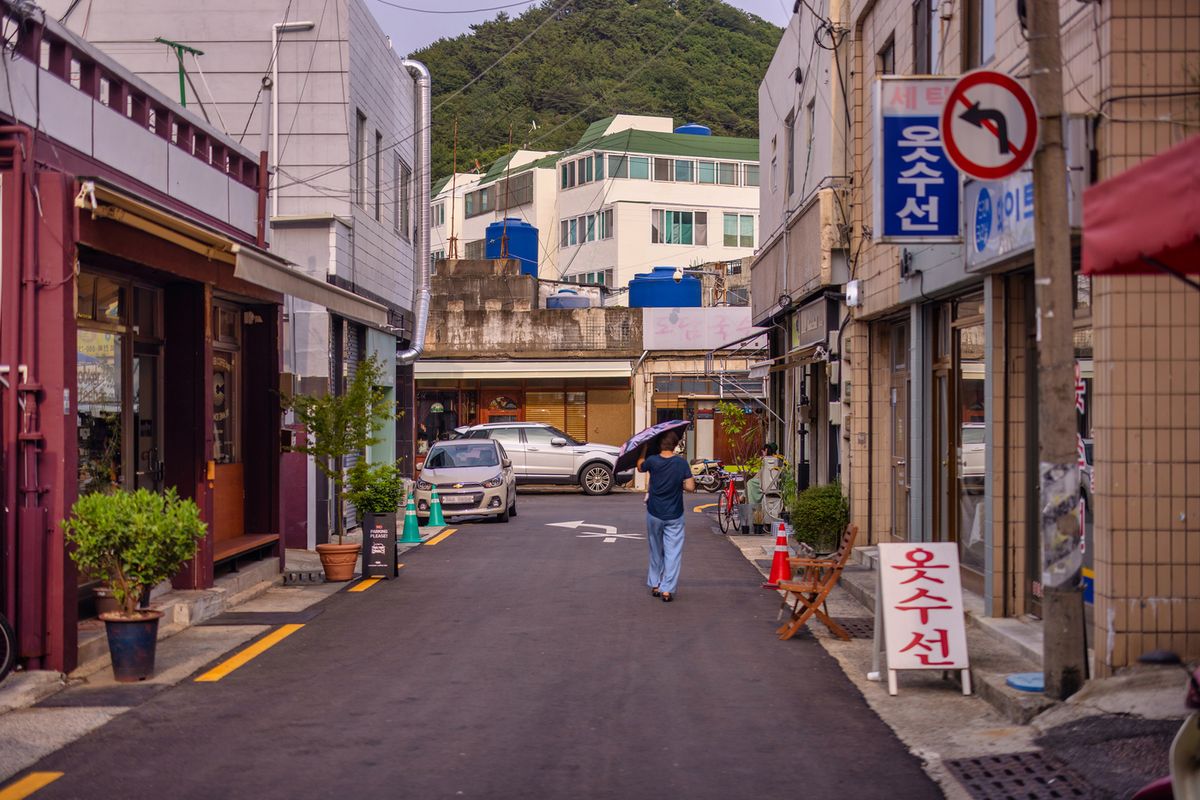
The point of coming is what sits around those counters. Small shops have taken corners of the hall and the old buildings along the lanes outside. Cafes, bakeries and restaurants now fill carefully refitted old buildings in what is otherwise a quiet residential part of Suyeong-gu.
Visit Busan's own description leans on how hidden it all feels. Its writer suggests even people who live nearby could walk past without noticing. That is the charm, and it's also the first catch: nothing here announces itself, so you need names to look for before you arrive.
Three names worth looking for
Visit Busan's feature picks out three places by name. Small shops like these change hands over time, so check each name on a map app before you set off.
TaTa Espresso Bar. A couple runs it, and Visit Busan calls it the most talked-about spot in the market. The sign is tiny, so it's easy to walk straight past. Espresso is the whole idea of the menu, and the page says that kind of focus is rare in Busan. Ordering works differently from a normal cafe — you order, then wait in the poster shop next door, and the coffee is brought over to you. The poster shop belongs to the wife of the same couple.
Day Swimming Club. This is a wine shop near TaTa, and from outside it looks like an ordinary neighbourhood store. The owner chooses the bottles and attaches a written note to each one, which helps if you don't know much about wine. There's room inside to drink house wine, beer or sangria. The building used to be a home, and Visit Busan points out the attic up a narrow staircase, the low-ceilinged kitchen and the original old windows.
Cochon. For bread, Visit Busan holds this bakery up as the leading example. A certified master baker runs it, and the signature is salt bread, alongside a range of other loaves. Behind the shop is a cafe built inside a converted house, bright and plain in style. The bakeries here have drawn the attention of what Korea calls bread pilgrims, people who travel the country to try well-known bakeries.
From Haeundae: Line 2 to Suyeong, then Exit 13
This is the easy part of the trip. Ride Line 2 in the Yangsan direction as far as Suyeong, which is the fifth stop after Haeundae Station and the second after Centum City, with no change of line on the way.
Leave by Exit 13. Busan Transportation Corporation's exit list for Suyeong names Gwangan Market at Exit 13, and Visit Busan gives the same exit. Visit Busan's information box puts the walk at 10 minutes, while the story text on the same page says about five, so plan for the longer figure.
Buses 42, 5-1, 40, 1001 and 1003 stop at Suyeong Station, according to Visit Busan. Drivers are pointed to paid lots nearby rather than a car park of its own, so I'd leave a car at the hotel.
The address is 71, Muhak-ro 49beon-gil, Suyeong-gu. If you take a taxi, show the driver the Korean version of that address. The contact number Visit Busan lists is 051-752-8107.
One practical problem comes up at the subway gate itself. Foreign guests get stuck there often, because the gates won't take their overseas bank cards, so sort out a transit card before you ride. I covered the options in my guide to paying for transport in Busan.
Suyeong is also a transfer station for Line 3, and the name has some history behind it. Busan Transportation Corporation explains that a Joseon-era naval headquarters, the Gyeongsang Jwasuyeong, moved here in 1653 and stayed until the Gabo Reform. The district name is short for that command.
What counts against it
I'd rather be clear about the weak points before anyone makes the trip.
Hours are the biggest one. Visit Busan lists opening days, hours and prices as varying by shop, so there's no single time when the market is open. You could arrive to find the one place you came for closed for the day.
The hall itself is not a working market. If you picture fish counters, food stalls and noise, you'll walk into a quiet, mostly empty space. For that kind of market, Haeundae Traditional Market is closer and much livelier.
There's not much to fill a whole afternoon either, since three shops and a few lanes won't take long. Without a reason to linger over coffee or wine, it can feel like a long way for a short stop.
Finally, the sea is not part of this trip, and nothing on Visit Busan's page mentions a view.
Who should go, and how to make it worth the ride
Go if bread and coffee are part of why you travel. A slow morning with salt bread and an espresso is a fair reason to ride five stops, and the empty hall makes good photos too if that appeals.
Guests who come back to the front desk talk more about the small streets around the beach than about the beach itself. This place fits that pattern — it's a neighbourhood lane with a few good shops, not a landmark.
Skip it on a short first trip, or if you only care about the sea, because you won't miss a major sight.
The smartest way to use it is as one stop among two. F1963, the old wire factory turned bookshop and cafe, starts from the same Suyeong Station, with a change to Line 3 for one stop to Mangmi. Pair the two and the trip from Haeundae makes more sense — bread here, then books and a garden there.
Before you leave, check that your shops are open that day. With hours set shop by shop, that one check on a map app decides whether the ride pays off.
Facts checked on 1 November 2026. Line 2 stations, the Suyeong exit list and the station name: Busan Transportation Corporation (humetro.busan.kr). Shops, address, phone, hours, buses, walking time and parking: Visit Busan (visitbusan.net). Photo: Busan Tourism Archive (visitbusan.net), KOGL Type 1
Comments
Post a Comment