Kangkangee Arts Village in Yeongdo: Book the Integrated Tour or Walk It on Your Own?
Kangkangee Arts Village is the ship-repair neighbourhood of Daepyeong-dong in Yeongdo. It faces Jagalchi Market across the water, on the island side of Yeongdo Bridge, and its wharf is usually crowded with boats waiting to be fixed. The practical question is how to see it. Should you book the integrated tour, or just turn up and walk the alleys yourself? My answer is to book the tour, and to come on a weekend if you plan to wander alone. Everything about the village here is taken from Visit Busan's listing, while the station and exit information is from Busan Transportation Corporation.
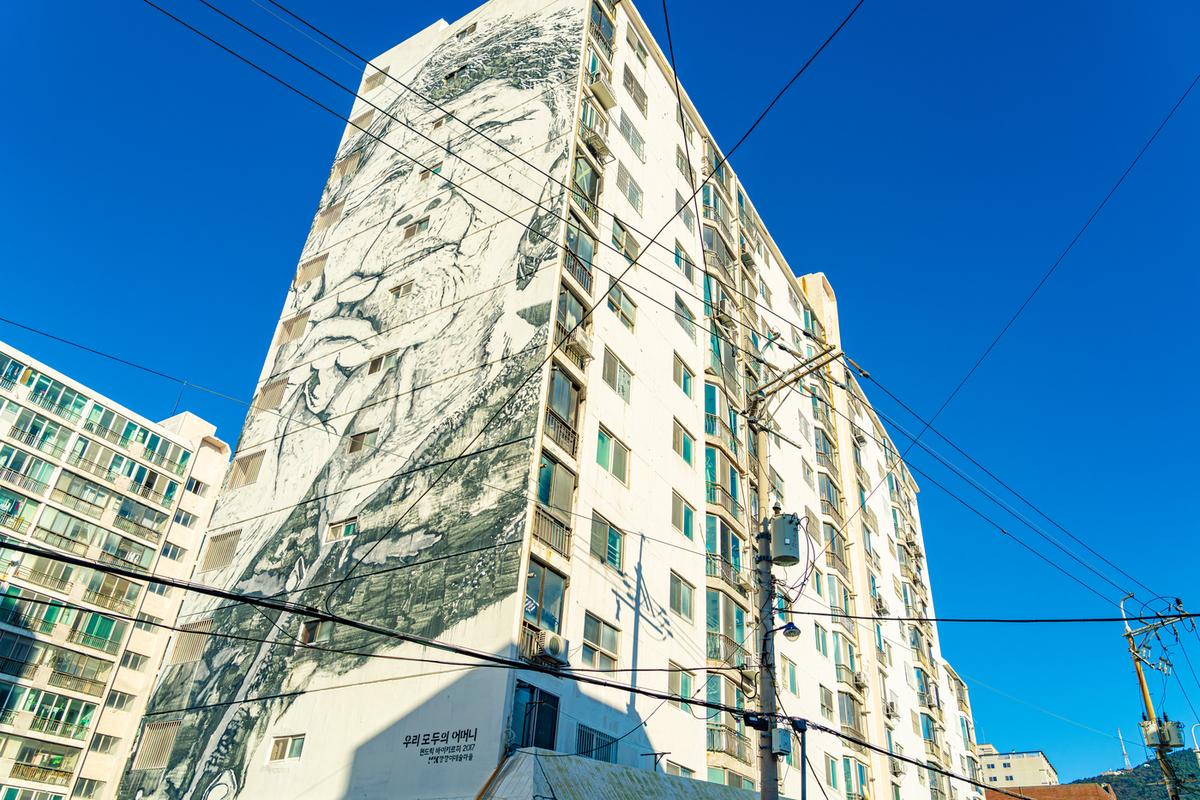
Why it's called Kangkangee
The name is a sound. At a repair yard, workers strip rusted paint and stuck-on shells from a hull by beating it with hammers, and every blow rings out with a sharp "kang" from the metal. For decades that noise never stopped in Daepyeong-dong, so the neighbourhood took the name.
Most people assume the hammering was done by men. Visit Busan points out that it wasn't. The work fell to the married women of the neighbourhood, who hung from a single rope against the side of a ship for years. Many of them lived with hearing loss and ringing ears so their children wouldn't grow up poor. That story is the core of the village — and it's the part you're most likely to miss if nobody tells it to you.
What the arts village is now
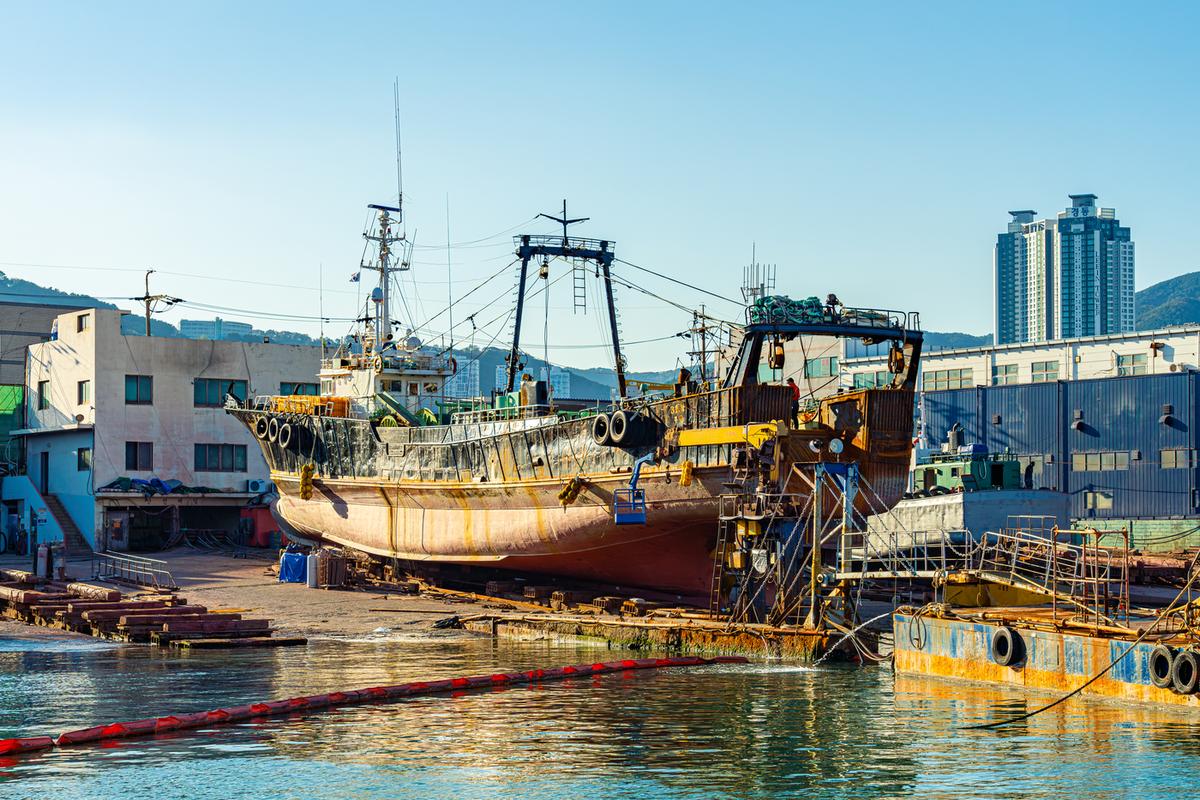
The yards are still working. A few years ago an urban regeneration project started here, and artists placed public artworks through the alleys between the workshops. Alongside them came a village workshop, a culture centre for residents, village tours, a boat programme and a ship experience hall.
There's also a small village museum. It covers roughly a century of ship repair and daily life in the neighbourhood through video, objects, written records and artwork.
So this isn't a pretty mural village built for photos. It's an industrial waterfront where the repair yards still run, with art added on top. If you like places with a working history, that's the appeal. If you want quiet lanes and cafés, it can feel noisy and hard to read without context.
The tour or your own feet
Here's how the two options compare.
The integrated tour. You book it online in advance. A village guide takes you through the alleys, and the package adds a boat tour out on the water. Visit Busan recommends it and gives a clear reason in its travel tip. The repair yards make the village very congested during the daytime on weekdays, and the tour is the way it suggests you see it then.
Walking it yourself. It costs nothing to walk the public alleys, and you set your own pace. Spotting which artist's work sits around the next corner is half the fun. The trade-off is that you'll see the art without the story behind it, and on a weekday you'll be sharing the lanes with the busy yards.
My call is the integrated tour for most people. The hammering women, the century of repair work and the view of the yards from the water are what make this place worth the trip. A guide gives you all three. If you'd rather walk alone, come on a Saturday or Sunday when the yards are quieter.
There are a few things the official page doesn't say. It doesn't give prices, only that fees differ by programme. It doesn't say which languages the guides speak or how often the tour runs. Ask about all three when you book, using the village's official site at kangkangee.com or the information centre on 051-418-3336.
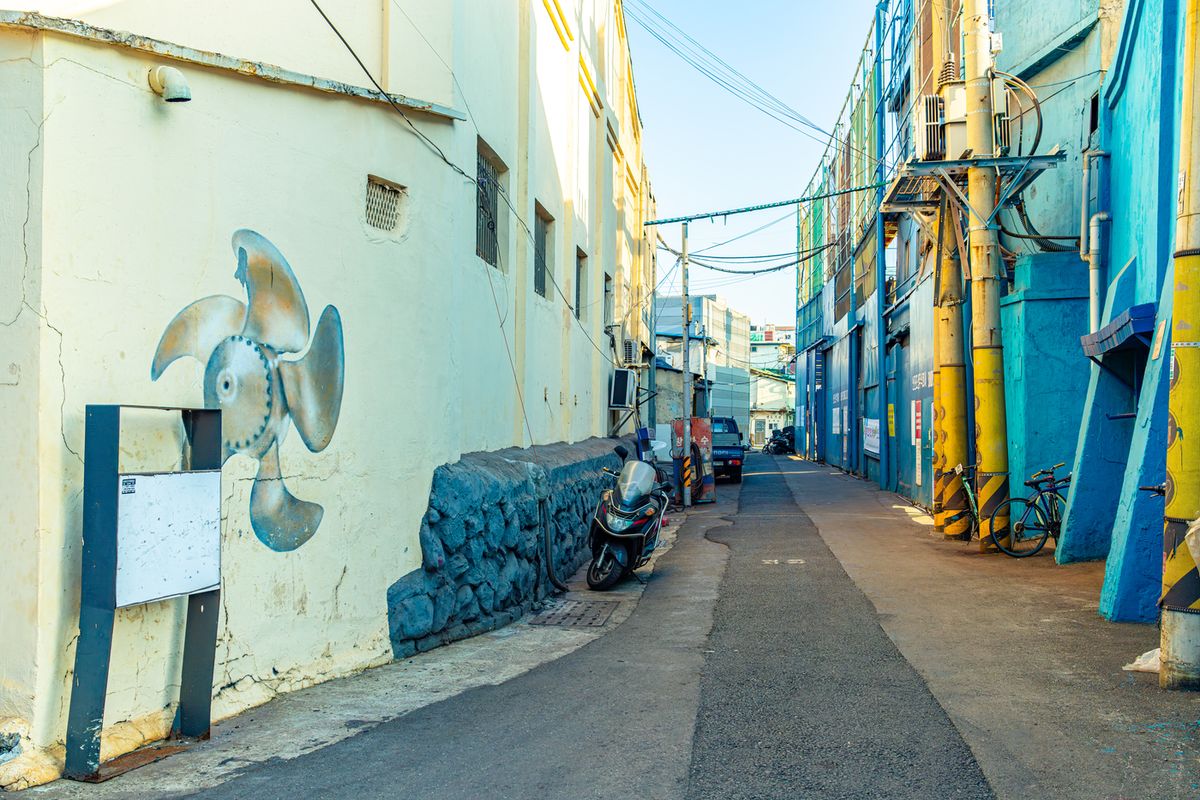
Finding your way through the alleys
If you do go on your own, don't rely on Google Maps. It's weak for walking directions in Korea, and our guests regularly get lost following it. I point everyone to Naver Map or KakaoMap instead, and the alleys here are exactly the kind of place where that matters. The T-money guide has a short section on both apps.
It's worth the effort. When guests come back to the front desk, the thing they mention most is rarely the beach. It's the side streets around it, and Kangkangee is all side streets.
Keep your voice down while you explore. People live in these lanes, and Visit Busan's etiquette note asks visitors not to be loud or make exaggerated gestures around residents.
Hours and the Monday rule
The tour and the village facilities are closed on Mondays. On every other day, Visit Busan lists 10:00 to 17:00.
Monday is a bad day for the whole island — not just this village. The National Maritime Museum is closed then too, and so is the Danubi Train at Taejongdae.
Getting there from Haeundae
The nearest subway stop is Nampo on Line 1, and the exit you want is number 6. Busan Transportation Corporation's exit table lists Taejongdae, the Yeongdo direction, Yeongdo Bridge and Yeongdo Police Station for that exit.
From Haeundae it's a two-line trip:
- Take Line 2 toward Yangsan and get off at Seomyeon, 16 stops along. Centum City is 13 stops from Seomyeon.
- At Seomyeon, change to Line 1 toward Dadaepo Beach. Nampo is the eighth stop.
From Exit 6, Visit Busan gives the walk to the village as 18 minutes. The other choice is the Yeongdo-gu 2 village bus, getting off at Daepyeong-dong. If you're driving, the parking listed is at the public car parks by Bongnae Market and Namhang Market, and both are paid. Visit Busan also lists a ramp and an accessible facility.
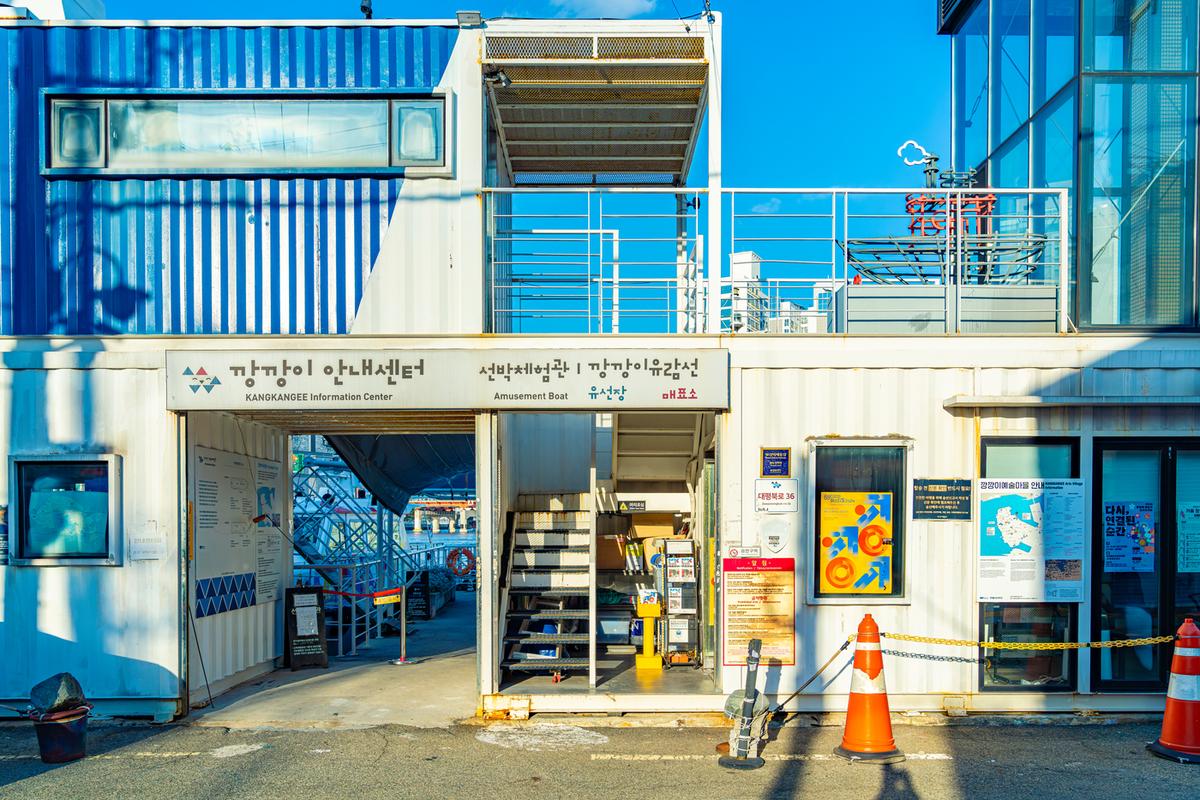
Pairing it with the rest of Yeongdo
On its own, this is a long way to come from Haeundae. Put it next to the other Yeongdo stops and the trip makes much more sense:
- Yeongdo Bridge lifts at 2pm on Saturdays, right by Nampo Exit 6
- Huinnyeoul Culture Village sits on the cliffs further along the coast
- Taejongdae is out at the southern tip
- The National Maritime Museum is the rainy-day option
Saturday fits best. The bridge lift is in the early afternoon, the yards are quieter at the weekend, and the village stays open until 17:00.
The downsides I'd weigh first
- It's a working industrial area. Expect machine noise from the repair yards.
- Weekday daytime is congested, according to Visit Busan's own tip.
- Prices aren't published on the official listing, and neither are guide languages.
- The tour needs advance booking online, so it doesn't suit a last-minute decision.
- It's closed on Mondays, like much of Yeongdo.
The short version
Kangkangee Arts Village is Busan's old ship-repair quarter, where women once hammered rust off hulls and artists have since filled the lanes with public art. Book the integrated tour if you can, because it brings the alley walk, the history and the boat trip together. If you go alone, pick a weekend and use Naver Map or KakaoMap. From Haeundae, change from Line 2 to Line 1 at Seomyeon, get off at Nampo, and leave by Exit 6.
Facts checked on 22 October 2026. Line 1 and Line 2 stations and Nampo Station exits: Busan Transportation Corporation (humetro.busan.kr). Village history, programmes, hours, closing day, route, parking, accessibility and contact: Visit Busan (visitbusan.net). Photo: Busan Tourism Archive (visitbusan.net), KOGL Type 1
Comments
Post a Comment