Is Ahopsan Forest Worth 31 Subway Stops? The Car-Free Route and Who Should Skip It
Ahopsan Forest is a long ride from Haeundae for what amounts to an hour or two on foot. I still think it pays off for one kind of traveller: someone with a spare day who has had enough of the beach. If you're working out how to get to Ahopsan Forest from Haeundae without a car, plan on two subway lines and a village bus. If you've only got three days in Busan and haven't seen the coast yet, leave this one out.
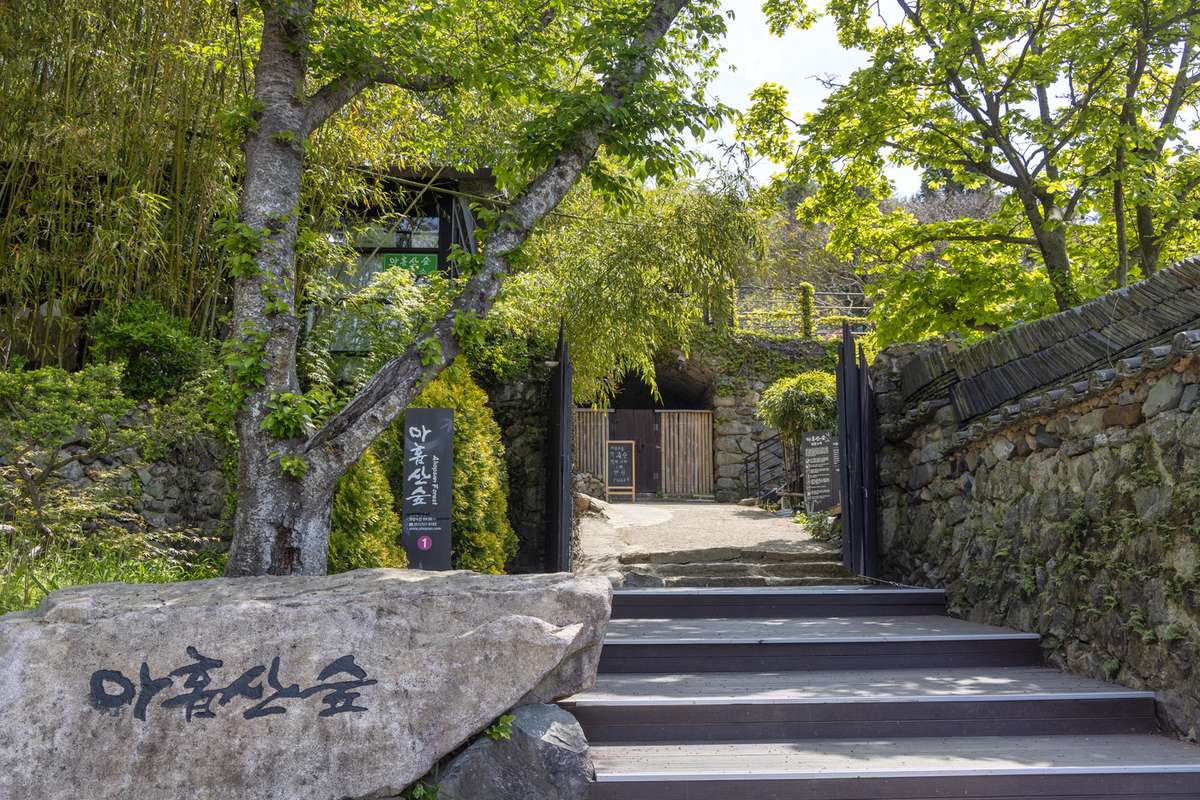
Count the stops before you commit
The forest is in Cheolma-myeon, Gijang-gun, but this isn't a trip along the Donghae Line like my Jukseong Cathedral route. You go by the city subway, all the way to the end of Line 1.
From Haeundae Station, ride Line 2 toward Yangsan and change at Seomyeon. That's 16 stops, or 13 if you board at Centum City. Then take Line 1 to Nopo, the last station on the line, for another 15. So it's 31 stops from Haeundae and 28 from Centum City, and the bus hasn't started yet.
I've left out a journey time on purpose, because any figure from me would be a guess. Look it up on the morning you go and work backwards from the last entry at 17:00. A late start is the easiest way to ruin this trip.
Overseas cards get refused at the subway gates, and foreign guests end up stuck on the wrong side. That's a poor way to begin a day with this much transit in it. Sort out payment before you leave, using my T-money card guide.
Nopo Station and village bus 2-3
Visit Busan's Korean and English pages agree on the last leg. Leave the subway at Nopo, transfer to village bus 2-3, and get off at Midong Village. Neither page names an exit, which is the one thing you'd want to know.
Busan Transportation Corporation's exit table helps a little. It labels Exit 2 for Nopo-dong and the place to catch buses, while Exit 3 leads to Busan Central Bus Terminal. I'd start at Exit 2, though that's my reading of the table rather than anything the forest listing says. If the stop isn't obvious, ask at the station before you wander off.
The listing gives no frequency for bus 2-3 and no walking time from Midong Village. Allow for a wait, and don't plan anything tight afterwards. For a map search, the address is 부산광역시 기장군 철마면 웅천리 520-10.
Nopo Station has lockers and elevators, according to the operator's station page. If you're carrying a big bag, leave it there instead of taking it up the trails.
A car makes all of this simpler. Visit Busan lists an Ahopsan Forest car park but no parking charge, so don't assume it's free. Group tour buses have to book ahead.
What the ticket actually buys
The name comes from an old Korean word for a mountain holding nine valleys. One family has looked after this land for about 400 years, and it stayed shut to outsiders through the colonial period, the war and the industrial decades that followed. A film shoot for Kundo: Age of the Rampant drew attention to it in 2014. The owners opened the gates to the public two years later. Its long status as green belt and water protection land is what kept it intact.
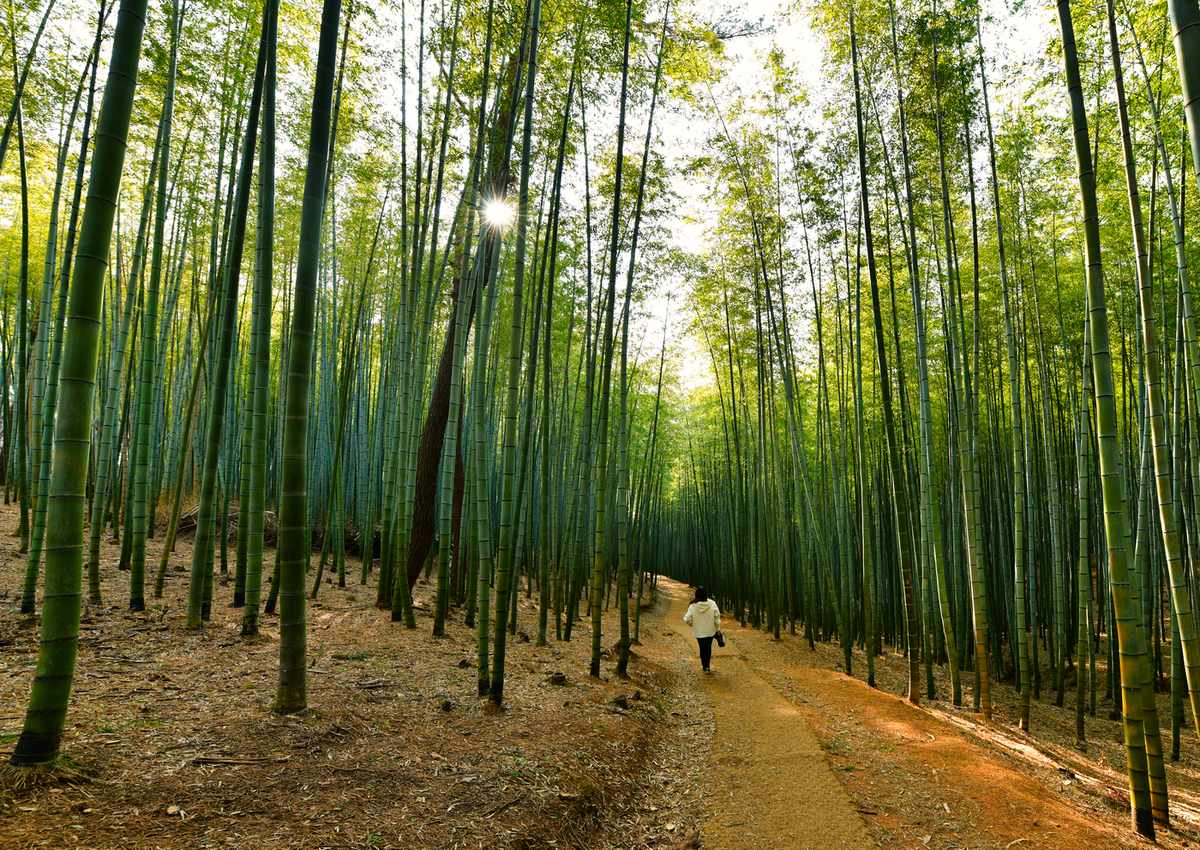
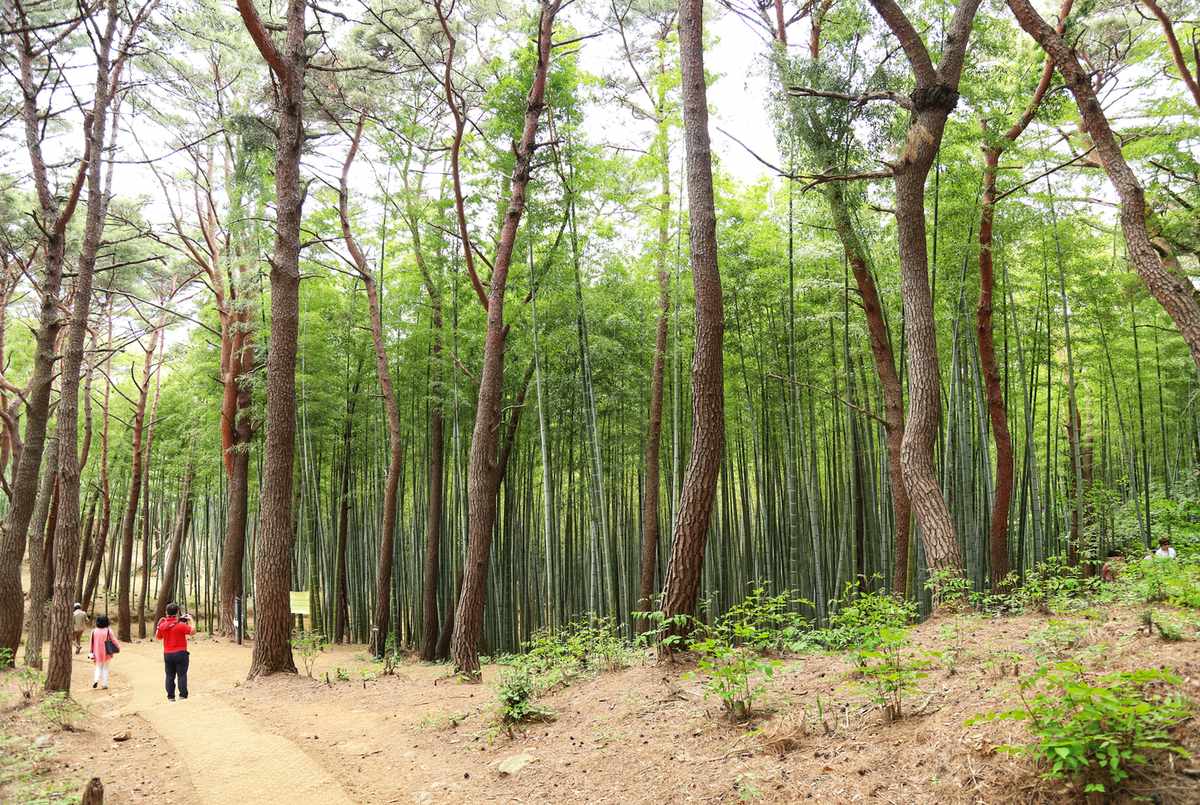
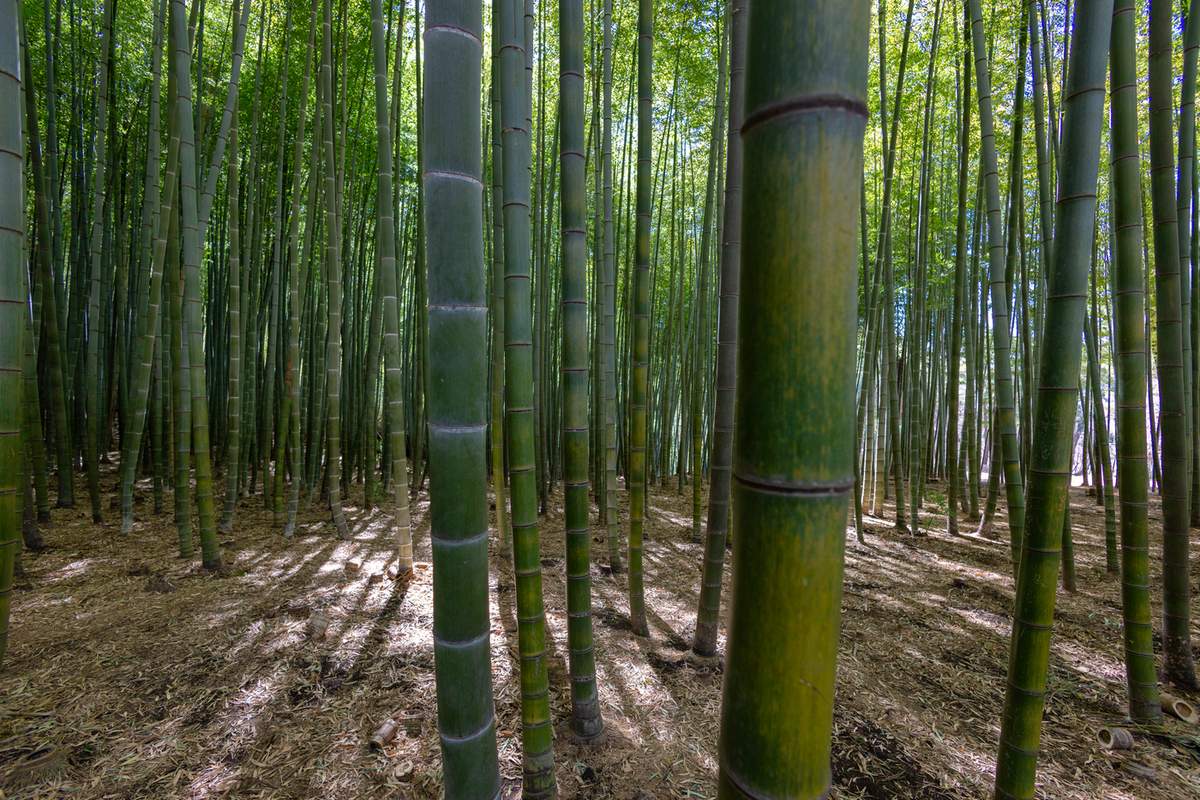
Arrows mark the route from the ticket booth, so you won't need a map on the trail. There are two bamboo stands, and they're the reason to come. The first is the Maengjongjuk grove, a former site for shamanic rites, where the stems close over your head. The second is flat ground with bamboo packed along both sides of the path. So little light gets through that it's the calmest stretch of the walk.
Between them you get red pine, cypress and oak. The forest counts 116 trees under protection, which is a number I find more persuasive than any brochure adjective.
You finish back near the entrance at Gwanmiheon, the family's head house. It's a traditional hanok built without nails, and it still runs on a wood furnace. The Korean page says the family lives there now, so treat that corner as somebody's home rather than a photo set.
Walking every trail takes one to two hours. That's the honest size of the attraction — a lengthy ride wrapped around a modest walk.
Rules that decide it for some families
Strollers, bicycles and hiking gear such as trekking poles aren't allowed in. If your child still needs a stroller, or someone in your group walks with poles, this forest is the wrong choice. The English page also says no pets, while the Korean page doesn't raise it. Collecting plants or insects is banned as well.
The listing shows no ramp or wheelchair information at all, though other Visit Busan pages often include it. I'd read that silence as a warning and call first on 051-721-9183.
Entry is paid, with one rate for adults and a lower one for ages 5 to 19. I only quote prices taken from an operator's own page, so check ahopsan.com for today's figure. That cost is one more point against it, since plenty of Busan's coast is free.
It's open 09:00 to 18:00 every day, and the gate stops letting people in at 17:00. The only holiday note on the page covers Lunar New Year 2026, when it stayed open. For any other public holiday, I'd phone.
Pack in Haeundae, not at the far end
Visit Busan's own advice is to bring water and wear comfortable walking shoes. That's the part I'd take seriously. The listing mentions no shop or food inside the forest, and I can't tell you what's near the Midong Village stop.
Water and chilled meals you can heat up, like lunch boxes and gimbap, are what guests buy most at the convenience store. This is a good day to copy them. Heat the food and fill your bag before you board, and you won't be relying on anything at the far end.
Mosquito repellent and fans are lent out for free at the forest, which tells you what warm days are like under the bamboo.
Who should make the ride
I'd go if you've already done the main beaches, you want a day off the coast, and bamboo is the specific thing you came for. Leave in the morning and treat the forest as the whole plan.
I wouldn't go on a short first visit. It costs you a big slice of a short trip plus an entry fee, and it adds nothing you need to understand Busan. Skip it as well if you're travelling with a stroller, since the rule leaves no way round it.
If you just want trees without crossing the whole city, hiking Jangsan from Daecheon Park is the closer option and it's free. The trade-off is effort — that's a proper climb of about three hours, where Ahopsan is a shorter walk of one to two hours with a far longer ride to reach it.
Facts checked on 9 November 2026. Forest history, trails, hours, rules and route: Visit Busan (visitbusan.net). Line 1 and Line 2 station order, Nopo Station exits and facilities: Busan Transportation Corporation (humetro.busan.kr). Photo: Busan Tourism Archive (visitbusan.net), KOGL Type 1
Comments
Post a Comment